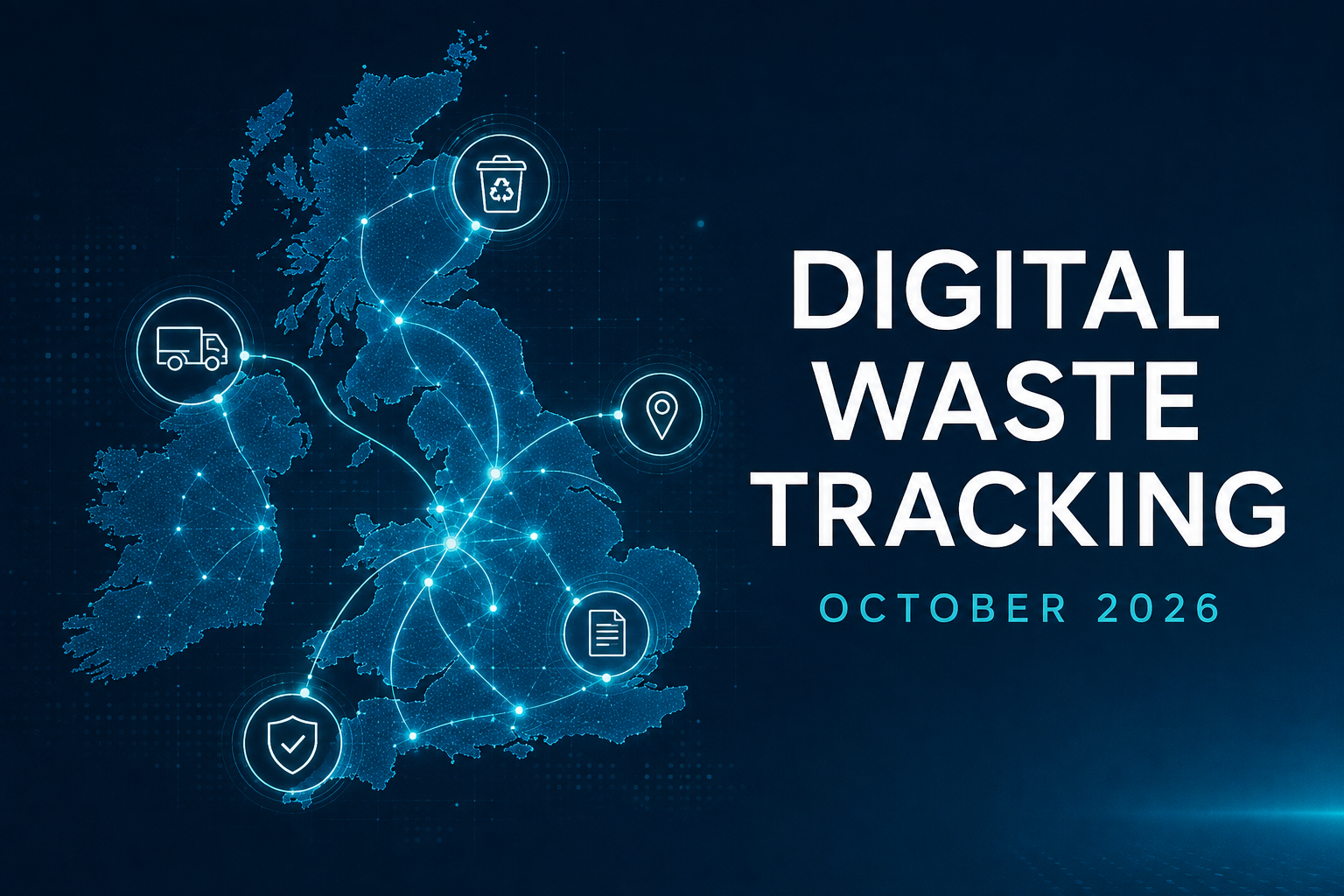
Digital Waste Tracking 2026: What Waste Companies Need to Know Before October

Ready to Streamline Your WEEE Management?
See how WEEE Manager can help your business stay compliant and efficient.
Digital Waste Tracking 2026: What Waste Companies Need to Know Before October
Digital Waste Tracking is one of the biggest changes the UK waste industry has seen in years. For businesses that collect, receive, sort, treat, recycle or manage waste, the move from paper-based records to digital reporting is no longer something to think about later. It is something to prepare for now.
From October 2026, the Digital Waste Tracking service becomes mandatory for waste receiving site operators in England, Wales and Northern Ireland. Scotland follows from January 2027. The aim is to create a clearer, more reliable digital record of where waste comes from, where it goes, and who handles it along the way.
For waste companies, this change is not just about replacing paperwork. It affects day-to-day operations, record keeping, site processes, customer communication and compliance.
What is Digital Waste Tracking?
Digital Waste Tracking is a national system designed to record waste movements digitally. Instead of relying heavily on paper waste transfer notes, manual filing systems, spreadsheets and disconnected records, waste information will be recorded in a more consistent digital format.
This is intended to make waste data easier to access, easier to check, and easier for regulators to use when tackling waste crime, poor record keeping and illegal disposal.
For legitimate waste businesses, the change also creates an opportunity. Companies that prepare early can reduce admin, improve visibility and give customers more confidence in the way waste is handled.
Who is affected first?
The first phase focuses on permitted or licensed waste receiving sites. This includes businesses and facilities that receive waste into a site, such as:
Recycling centres
Waste transfer stations
Treatment facilities
Landfill sites
Metal recycling sites
WEEE recycling facilities
Other permitted waste receiving operations
Even if your business is not directly included in the first mandatory phase, the change is still likely to affect you. If you collect waste and take it to a receiving site, that site may require better digital information from you before accepting loads.
That means carriers, brokers, man-and-van waste operators and collection businesses should not ignore the October 2026 deadline. The pressure to provide accurate digital waste data will move through the whole chain.
Why paper waste notes are becoming a problem
Paper waste notes have worked for years, but they create several issues for modern waste businesses.
Paper records can be lost, damaged, misread or filed incorrectly. They can also take time to retrieve when a customer asks for proof, when a disposal site needs information, or when an audit takes place.
Spreadsheets are better than paper in some ways, but they still rely on manual input and can quickly become messy when multiple staff, vehicles, customers and waste streams are involved.
Digital Waste Tracking is pushing the industry towards a more organised way of working. The businesses that adapt early will find it easier to stay compliant and prove what happened to each load of waste.
What information will waste companies need to manage?
Waste companies should expect to manage accurate details around:
The waste producer
The waste carrier
The receiving site
Waste type and EWC codes
Waste weight or quantity
Collection and delivery dates
Vehicle and driver details
Signatures and acceptance records
Hazardous waste information where required
Supporting documentation
The exact requirements can vary depending on the type of waste and business, but the general direction is clear: waste records need to be accurate, digital and easy to access.
Why preparation matters before October 2026
Waiting until the deadline creates unnecessary risk. A waste business may need time to train staff, update processes, check customer information, review waste codes and make sure drivers understand the new workflow.
Businesses that leave it too late may find themselves rushing to fix admin problems at the same time as trying to continue normal collections.
Preparing early gives your company time to:
Test digital systems
Clean up customer and site records
Train drivers and office staff
Reduce paper admin gradually
Improve reporting
Spot gaps in compliance
Avoid last-minute disruption
Digital change is much easier when it is introduced in stages.
How WEEE Manager helps waste businesses prepare
WEEE Manager is designed to help waste companies move away from manual paperwork and manage waste records digitally. The platform helps businesses create, store and manage waste notes, customer details, collection records and compliance information from one place.
Instead of relying on paper forms, scattered files or messy spreadsheets, teams can keep waste movement information organised and accessible.
For businesses dealing with WEEE, recycling, collections or receiving site records, this gives a clearer way to manage the information needed for modern waste compliance.
Key benefits of using a digital waste management system
A digital system can help with:
Faster waste note creation
Better record storage
Easier customer lookup
Driver-friendly job information
Reduced admin time
Improved compliance visibility
Clearer reporting
Better preparation for Digital Waste Tracking
For many waste businesses, the real benefit is control. When records are digital, it becomes much easier to find what you need, check what has happened and prove that waste has been handled properly.
Final thoughts
Digital Waste Tracking is not just a future regulation. It is a major operational change for the waste industry.
The businesses that prepare early will be in a stronger position when October 2026 arrives. They will already have cleaner records, better internal processes and staff who understand how digital waste information should be handled.
If your company still relies on paper waste notes or spreadsheets, now is the time to review your process and move towards a system built for the way waste management is changing.
Transform Your Waste Management Today
Join hundreds of businesses using our platform to simplify WEEE compliance, reduce costs, and save time.
No credit card required • Free consultation • Quick setup
Frequently Asked Questions
Tags
Start Your Digital Waste Tracking Journey
Get started with professional waste management software. Request a demo or schedule a callback to learn more.